A few simple dance games give a children's party variety and structure. Pick two or three, explain one rule at a time and try a practice round before starting properly.
Choose a game for your group
With no equipment, try freeze dance, circle dancing or the secret musician. In a small room, choose movements on the spot rather than running. With mixed ages, start simply and offer older children an extra challenge. Ages below are guides, not requirements. Nobody has to dance with a partner or stand in the middle.
1. Living musical chairs, roughly ages 10–13
Some children sit in a circle with their legs apart and become the places to sit. Others walk around to music. When it stops, find a free space calmly. No pushing or jumping. If two players reach one place, use rock-paper-scissors. Explain the rules and check everyone is comfortable with this game first.
2. Balloon stamping, roughly ages 7–13
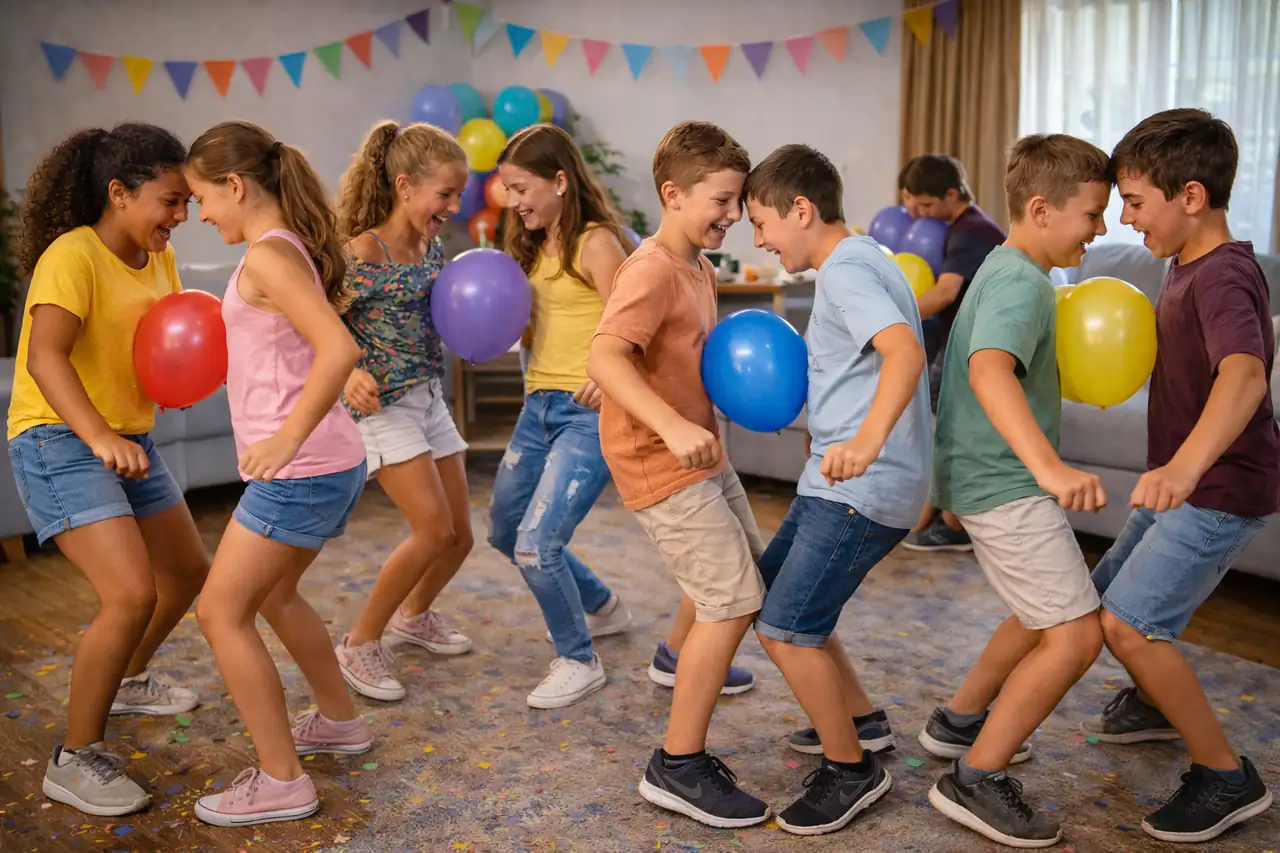
Players have a balloon tied near an ankle and try to pop another balloon while keeping their own. This is an active, noisy game and will not suit every group. Use a clear space, explain the boundaries and choose freeze dance instead if children dislike loud pops.
3. Balloon dancing, roughly ages 7–13
Pairs hold a balloon between their bodies while dancing without using their hands. Try a slow turn or raising both arms. Keep the movements controlled and let children choose whether to join in. Working together is the fun part.
4. Freeze dance, roughly ages 6–10
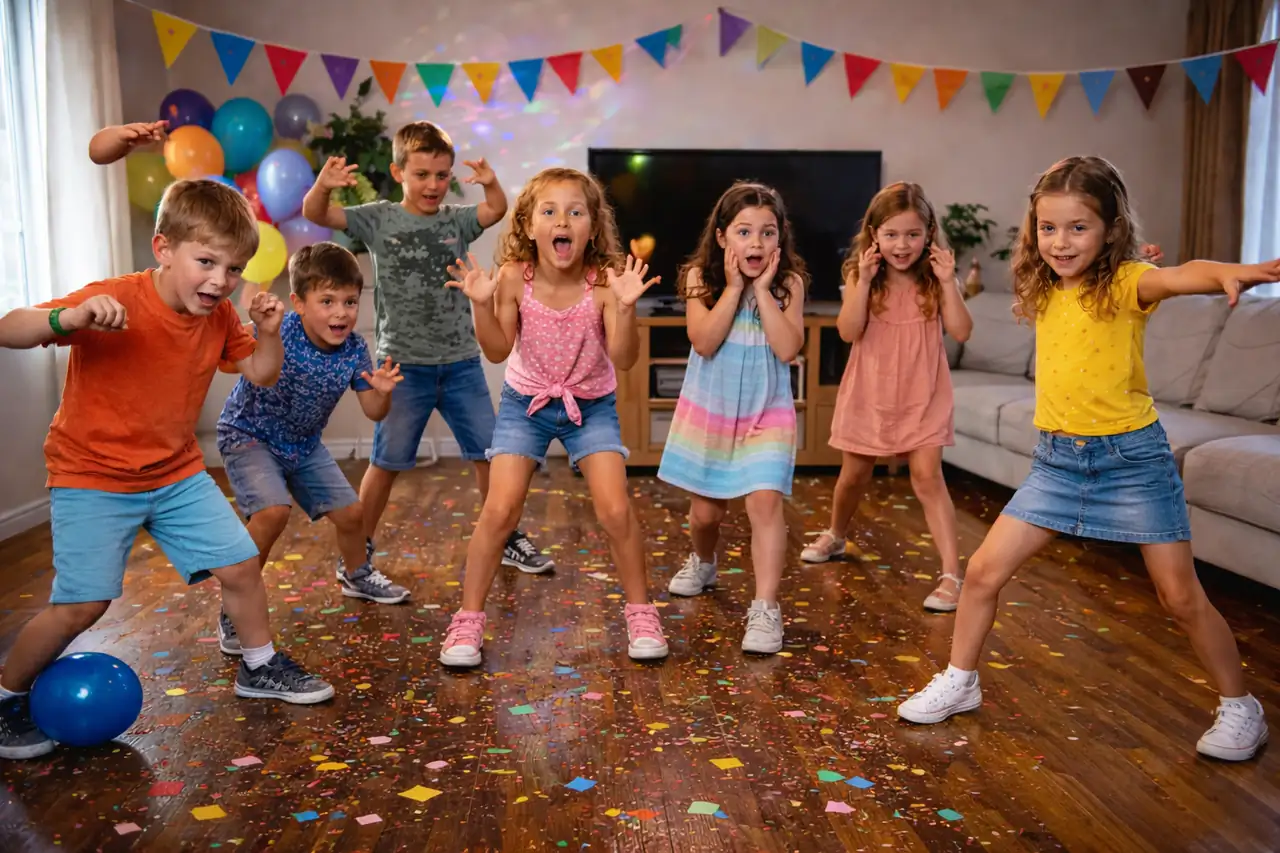
Dance while the music plays and freeze when it stops. Give each round a pose: robot, animal or statue. The birthday child can suggest one too. Play without elimination so everyone stays involved.
5. Circle dancing, roughly ages 7–13
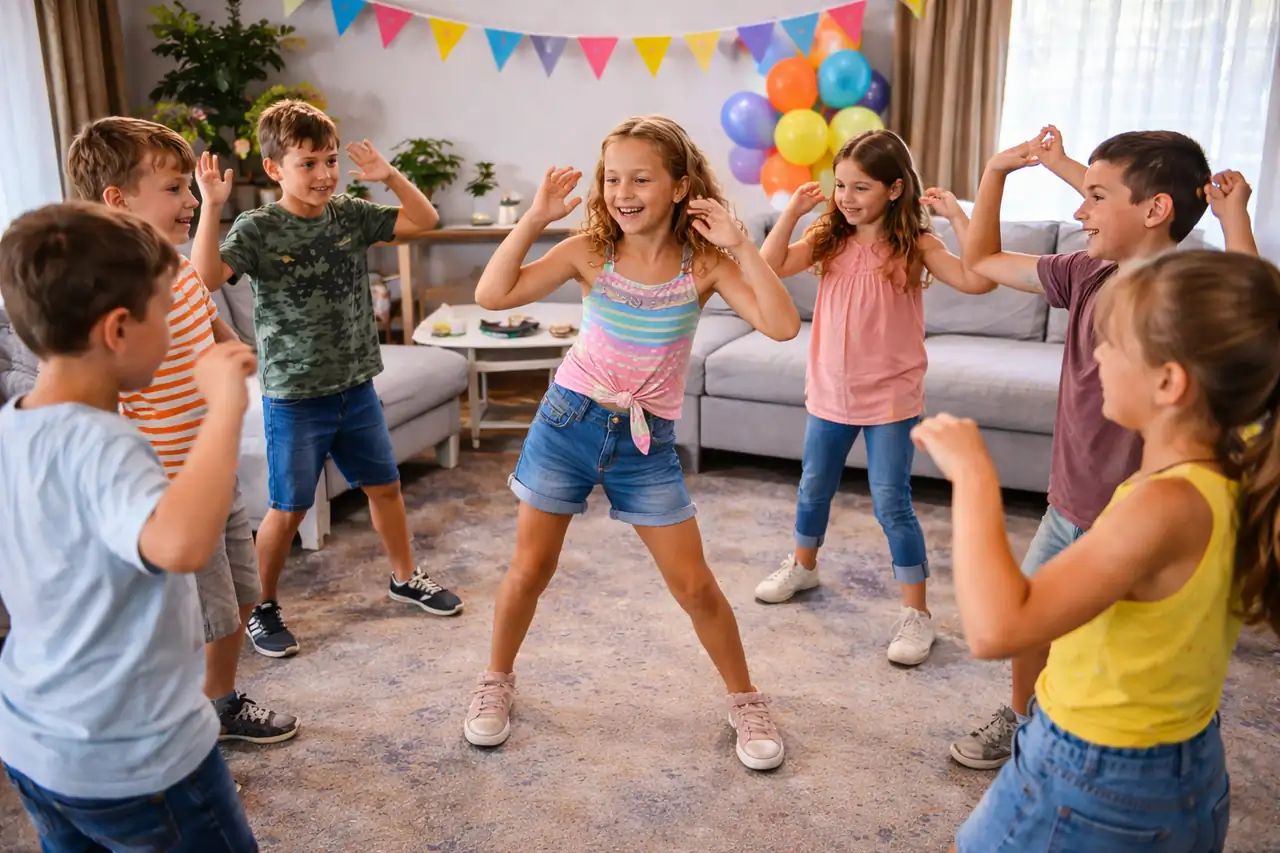
One willing child demonstrates a movement in the middle and everyone copies. After about half a minute, invite someone else. Watching for a while is fine.
6. The secret musician, roughly ages 6–10
One child briefly looks away while the group chooses a leader. Everyone copies that leader's changing movements. The returning child tries to work out who is leading. This is a quieter game between dance rounds.
7. Matching cards, roughly ages 11–13
Cut playing cards in half and hand them to children who want to play. They find the matching half and may dance together. Joining in is optional. Choose a shared closing song for anyone who prefers to stay with the group.
A sample half-hour programme
Start with five minutes of free dancing, then five minutes of freeze dance. Take a short water break and spend five to ten minutes on the secret musician. Finish with a song chosen together. Extend a game that works and move on if attention fades.
Find music in the playlist for ages 8 to 12. For school-leavers, use the ten end-of-school party tips.
Would you like me to lead the party?
At a children's disco, I bring music, sound and lights and lead the games. See the options for a birthday disco or school party, and tell me the ages and location.